
We all know the moment: right after the winter walk, your dog is damp, a bit muddy – and you’re both desperate to curl back up on the warm, cosy sofa. Whether you’re at the car boot or back through the front door, the next few minutes matter more than most of us realise.
So we did the research for you. We pulled together advice from the UK’s most trusted vets and animal charities, including Blue Cross, PDSA, Battersea, Dogs Trust and Medivet – and it all points the same way:
Wash when it’s needed and dry thoroughly.
Here’s how to dry a dog after a walk, what to wipe off first, and when a full wash makes the difference.

In this blog you'll find:
- How often you should wash your dog in winter
- Wipe or wash? Mud, grit, and salt after a winter walk
- Why drying matters more than washing
- How to dry a dog after a walk (step by step)
- Towels, hair dryers, or a self-service dog wash?
- Your “before the sofa” checklist
- When to call the vet
- For businesses: why winter is dog wash season
- FAQs
How often should you wash your dog in winter?
Less often than you might think: wash when your dog is muddy, smelly or salty – instead of on a fixed schedule.
UK vet Dr Rory Cowlam says “generally, most dogs can be bathed once a month” and that dogs who “jump in muddy puddles and swim” may need bathing more often (Lily’s Kitchen, 2025). Petplan’s vet-approved guidance calls “at least once every 3 months” a good rule of thumb and says a monthly or even weekly bath is fine if your dog needs one. The UK vet group Medivet agrees that baths are sometimes needed to clear mud and odour, while advising against bathing so often that the skin dries out.
So why does winter feel different?
Because “dirty” happens a lot more. The UK averages around 159 days of rain or snow a year (Met Office, 1991–2020 averages) and a muddy, gritty winter walk is exactly the kind of dirty that calls for a proper wash.
Before you wash:
- Use a shampoo made for dogs as they’re “much more mild than human products”(Wood Green)
- Since bathing can wash away drop-on flea and worming treatments (Blue Cross), check the product label or ask your vet about timing.
- Skin condition? Ask your vet how often to wash.
Our rule of thumb: wipe every walk, wash when there’s a reason, and dry every time!
Wipe or wash? Mud, grit, and salt after a winter walk
Wipe your dog’s paws and legs after every walk – and give them a full wash when they’re properly muddy, salty, or smelly.
Medivet advises wiping paws and legs after every walk, especially between the toes. Battersea warns that “salt and grit from roads and pavements can also get lodged between their toes”, and PDSA says to “be sure to wash your pet’s paws upon returning home.”
Why it matters more in winter:
- Dogs Trust says gritting salt can irritate and damage paw pads – causing soreness, dryness, cracking, redness, or even bleeding.
- Licking it off is the bigger worry – “rock salt can be toxic to dogs, so always clean it off before they get a chance to lick it off themselves” (Medivet) and “even small amounts of rock salt can irritate the digestive system” (Dogs Trust).
- On long-haired dogs, snow can build up between the toes, “turning into ice balls” (Battersea). PDSA suggests keeping the hair between the pads trimmed and particularly after a snowy walk if you experience one, soaking off any snow in warm water.
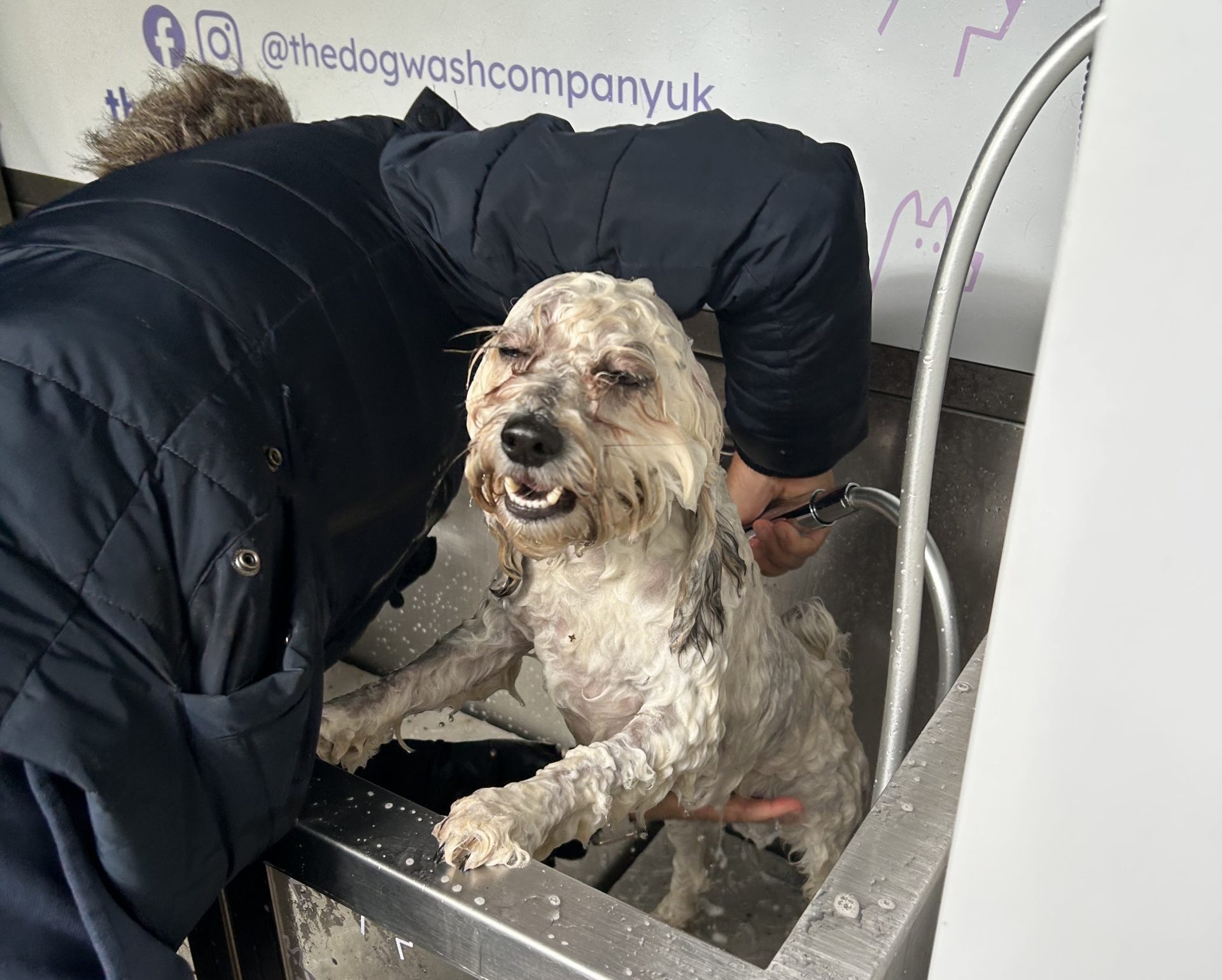
When a full wash makes the difference: when mud has worked into the coat, after walks along gritted roads and pavements, or when that wet-dog smell has followed you home.
Why drying matters more than washing
A coat that stays damp is the part that causes trouble: sore skin, a chilly dog, and that lingering wet-dog smell.
- “Warm, damp fur creates a perfect breeding ground for bacteria and infection” (Medivet).
- “A wet dog is much more susceptible to hypothermia, particularly small breeds” (Medivet).
- Animal Trust lists a “coat that is dirty or matted” among the common triggers for hot spots and advises to “keep your dog’s coat clean and dry, particularly after swimming or bathing.”
- Wet-dog smell is actually caused by yeast and bacteria living in the fur – and “as the water evaporates from the fur, the compounds become airborne” (Britannica). That’s why a damp dog drying slowly on the sofa can fill the room.
As vet Aimee Warner told PetsRadar:
“It’s important to thoroughly dry your dog after wet walks or baths.”
How to dry a dog after a walk (step by step)
Towel off, dry the paws, use low heat if you use a dryer, brush through thick coats and settle them somewhere warm.
- Start at the car or the door: Keep a towel in the car or at your front door so drying starts before they get in.
- Towel the body and legs: Give them a good towel-down, working through the coat rather than just the top layer.
- Dry the paws thoroughly: Battersea’s advice is to “dry them thoroughly after they’ve been outside”. Check between the toes for grit and salt while you’re there.
- Check where damp hides: In our experience, the belly, armpits, under the collar, and between the toes stay wet the longest.
- Use a dryer carefully: Blue Cross recommends a hair dryer on low heat and low speed, with lots of praise and treats and stopping if your dog looks worried. Wood Green adds: “Keep the dryer moving so you don’t risk burning their skin.”
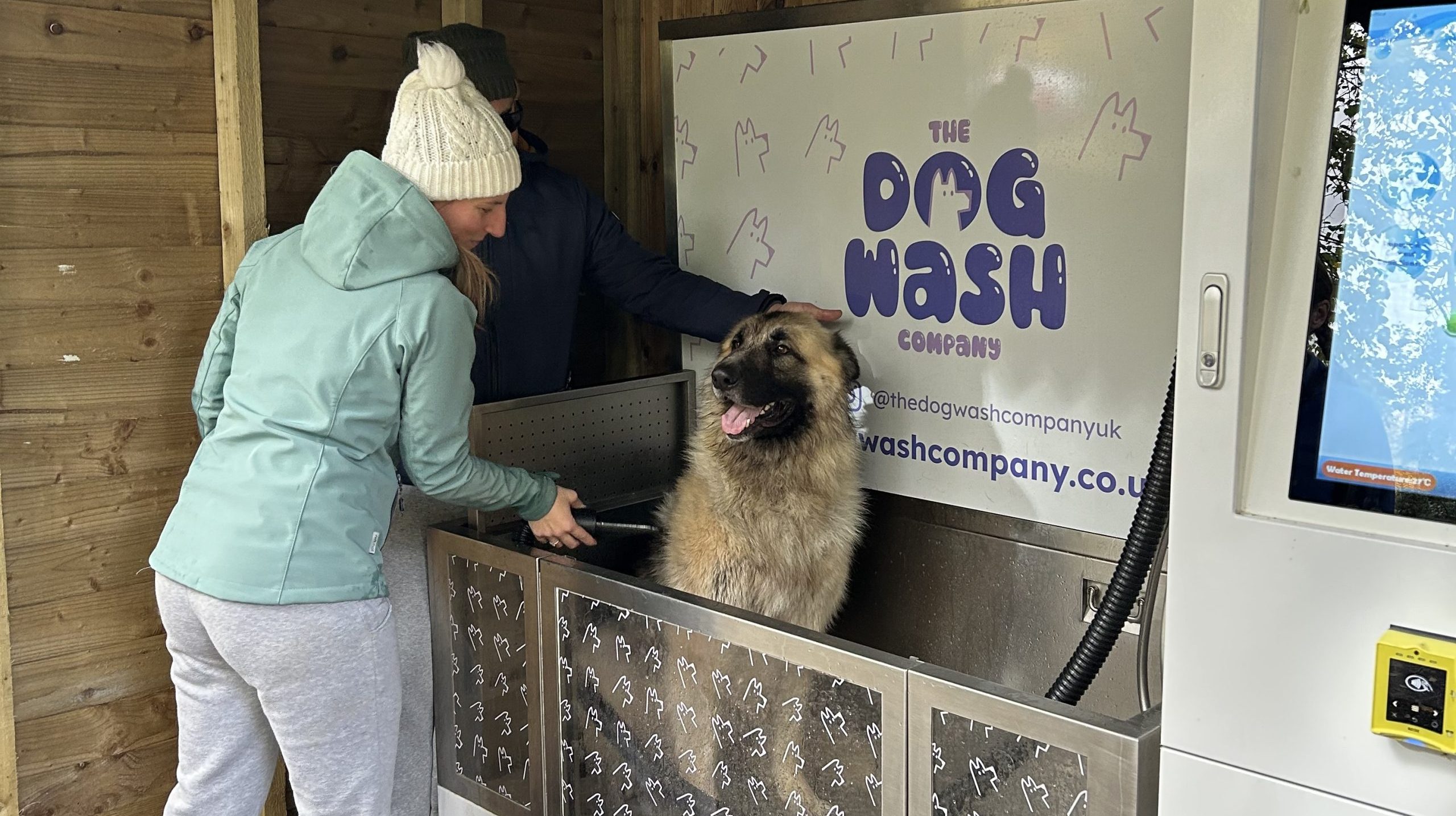
- At a self-service dog wash however, the built-in dryer doesn’t blow hot air, so heat isn’t a worry! You can adjust the strength to suit your dog’s coat: gentler for short coats or nervous dogs; stronger to reach through thick or double coats.
- Settle them somewhere warm: Battersea recommends a cosy bed away from cold draughts.
For next time: PDSA says some shorter-haired breeds, puppies, and older dogs benefit from wearing a coat in colder weather.
Towels, hair dryers or a self-service dog wash?
A towel is fine for a lightly damp, short-coated dog. For a muddy, salty, or thick-coated dog – a full wash and dry gets the job done properly!
- Towel
- Best for: short coats, light damp, and quick wipe-downs.
- Keep in mind: thick coats can stay wet underneath.
- Hair dryer at home
- Best for: longer coats and dogs already used to a dryer.
- Keep in mind: use low heat and low speed – and keep it moving. It takes time and the mud ends up in your bathroom …
- Self-service dog wash
- Best for: muddy dogs, dogs of all sizes, thick or double coats, and salty or gritty paws.
- Keep in mind: warm water, salon quality dog shampoo, conditioner, and a built-in adjustable dryer are all there. There’s no booking and a wash takes around 10 minutes.
A self-service dog wash is a machine where you wash and dry your own dog, with everything you need built into 1 system. Turn up, tap to start, and go at your dog’s pace – then head home with a clean, dry dog. Prices vary by location, but a wash is typically around £8-10. As our partner Jon Lugg, who runs Waggy Wash Club in Cardiff, puts it: “The mess stays there. You don’t.”
With now 100 locations across the UK and Ireland, there’s likely one on your walking route. Find your nearest self-service dog wash.
Your "before the sofa" checklist
Run through this right after the winter walk:
- Towel off their body and legs
- Wipe paws and legs, especially between the toes
- Check for grit, salt, or sore paws
- Dry fully (including their belly, armpits, and paws)
- Brush long or double coats
- Settle them in a warm bed, away from draughts
Save this one for your next winter walk!
When to call the vet
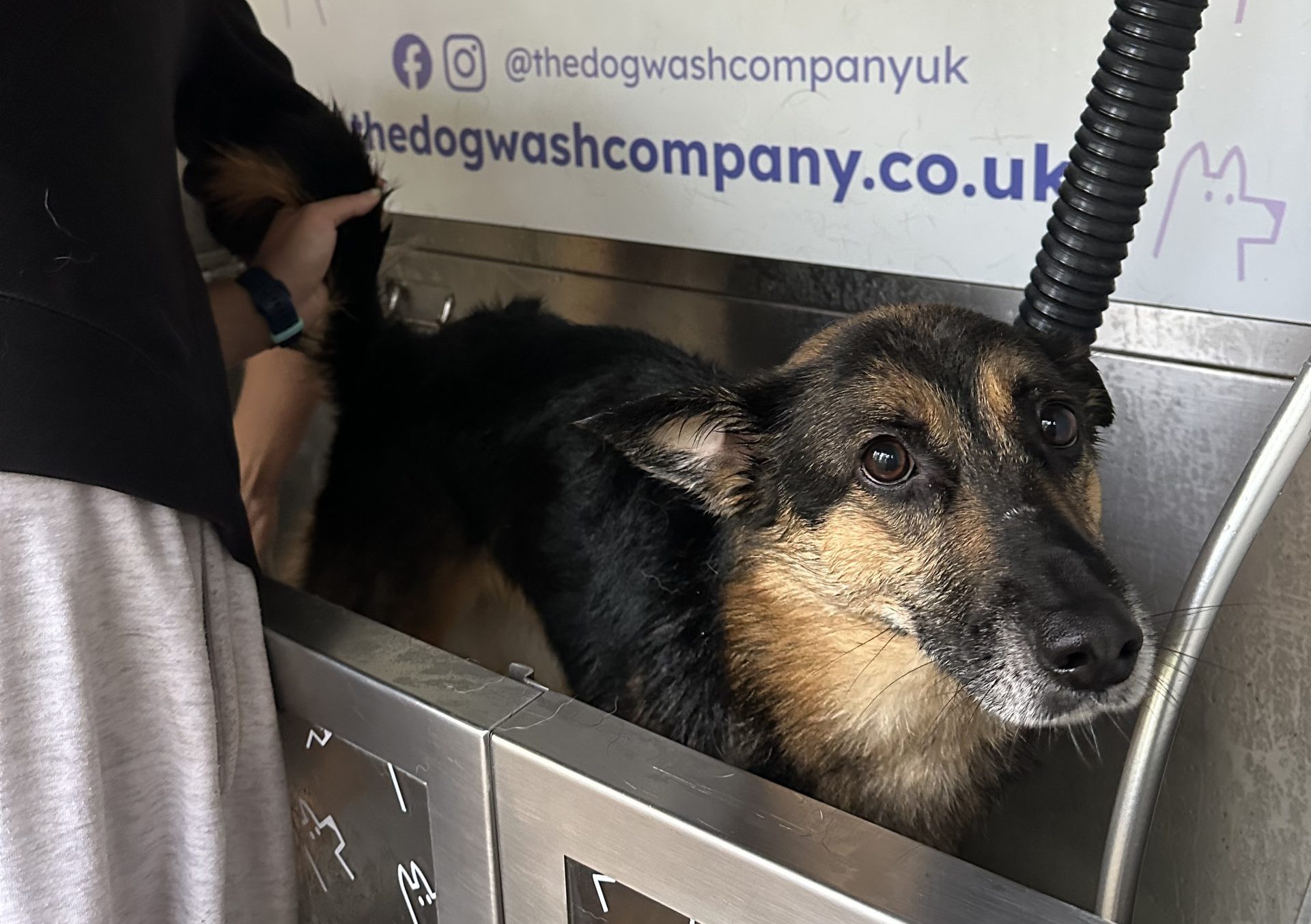
Call your vet if skin stays red or sore, or if you think your dog has licked or eaten salt.
- Redness, irritation or sore skin that doesn’t settle. PDSA advises getting veterinary advice “as soon as you notice a hot spot or unhealthy skin”.
- Signs of salt ingestion: vomiting, diarrhoea, excessive thirst, tremors, or seizures (Dogs Trust). Contact your vet straight away.
For businesses: why winter is dog wash season
The muddy months are when a self-service dog wash proves its worth!
Nearly 7 in 10 of our partners say their machine is busier in autumn and winter.
If dog walkers already pass your business – every wet walk is a reason for them to stop. Our network covers more than 20 types of business and you canlease or buy a machine outright and keep the revenue it earns.
- Dog Wash Machine Installation Guide: Placement, Plumbing and Power
- Behind the scenes of our 2026 record-setting month
- From Dog Walks to Revenue: How Country Parks Turn Muddy Paws into Profit
Book a free call
Frequently asked questions
There’s no fixed schedule. UK vet Dr Rory Cowlam says most dogs can be bathed around once a month, and dogs who get muddy may need it more often. Wash your dog when they’re muddy, smelly or salty, and avoid washing so often that their skin gets dry or irritated.
Towel the body and legs, then dry the paws thoroughly, including between the toes. If you use a hair dryer, keep it on low heat and low speed and keep it moving. Check the belly, armpits and under the collar, where damp lingers longest, then settle your dog somewhere warm and away from draughts.
Yes, if they’re wet or muddy. Battersea advises drying off wet and muddy dogs after walks, and Medivet warns that warm, damp fur can be a breeding ground for bacteria and infection.
It can. Medivet says warm, damp fur creates a breeding ground for bacteria and infection. Animal Trust lists a dirty or matted coat among the common triggers for hot spots, and advises keeping your dog’s coat clean and dry.
It’s best not to. Blue Cross only suggests air-drying on a warm summer day. In winter, a wet dog is more likely to get cold, especially small breeds (Medivet), so towel dry and use a low-heat dryer instead.
Yes, on low heat and low speed, with plenty of praise and treats. Keep the dryer moving so you don’t risk burning their skin, and stop if your dog seems worried (Blue Cross, Wood Green). At a self-service dog wash, the built-in dryer isn’t hot, and you can adjust its strength to suit your dog’s coat.
Wet-dog smell comes from yeast and bacteria that live in your dog’s fur. When the coat gets wet, those compounds become more noticeable, and they become airborne as the water evaporates (Britannica). A proper wash and a thorough dry help.
At least wipe them, especially between the toes. In winter, PDSA advises washing your dog’s paws when you get home, because grit and salt can irritate paw pads and upset your dog’s stomach if licked off.
Bathing washes away drop-on flea and worming treatments (Blue Cross). Check the product label or ask your vet about how long to wait.
It can be. Dogs Trust says gritting salt can cause soreness, cracking and redness on paw pads, and that even small amounts can irritate the digestive system if licked. Medivet says rock salt can be toxic, so clean it off before your dog licks it.
Some do. PDSA says some shorter-haired breeds, puppies and older dogs benefit from wearing a coat in colder weather.
No. Use a shampoo made for dogs. Wood Green says dog shampoos are much milder than human products.
At a self-service dog wash. The Dog Wash Company has 100 locations across the UK and Ireland, with warm water, salon-quality dog shampoo, conditioner and a built-in adjustable dryer, and no booking needed. Find your nearest dog wash.
Most washes take around 10 minutes, including the rinse, shampoo, conditioner and dry.
Related reading & Sources
- Muddy Autumn Dog Walks: 10 Things Every UK Dog Owner Should Know
- Find your nearest self-service dog wash
- Lily’s Kitchen (Dr Rory Cowlam, vet): How often should you wash your dog? (March 2025)
- Petplan (approved by Dr Brian Faulkner, vet): How to bathe a dog
- Medivet: Grooming your dog for cold weather
- Met Office: UK climate averages
- Wood Green: How often should I bathe my dog?
- Blue Cross: How often should you wash your dog?
- Battersea: Winter dog care
- PDSA: Winter advice to keep your pet safe (December 2022)
- Dogs Trust, reported by VetClick: Wipe paws after walks (November 2025)
- Animal Trust (Dr Mariella Roberts, vet): Hot spots on dogs (May 2025)
- Britannica: Why do wet dogs have a wet-dog smell?
- PetsRadar (Aimee Warner, vet): Vet advice on walking your dog in the rain (November 2024)
- PDSA Pet Health Hub: Hot spots (acute moist dermatitis) in dogs